
So, you’re being offered a way to make money on cryptocurrency price differences. Sounds smart, sounds technological, sounds like something only a chosen few understand. I have to disappoint you — you’re not chosen. You’re the target.
TL;DR
Fake crypto exchanges disguise themselves as well-known platforms like Bybit, promote themselves through YouTube videos about “arbitrage” and “currency pair scanners.” The scheme is simple: they let you withdraw a small deposit so you believe it works, then take the large one. The sites coinbit-exchange.com and chronictoken.io are examples of such platforms.
Red flags:
- Promises of 5–10% per day on “automatic arbitrage”
- A name similar to a well-known exchange
- Promotion via YouTube Shorts with “secret schemes”
- At first, small withdrawals go through without issues
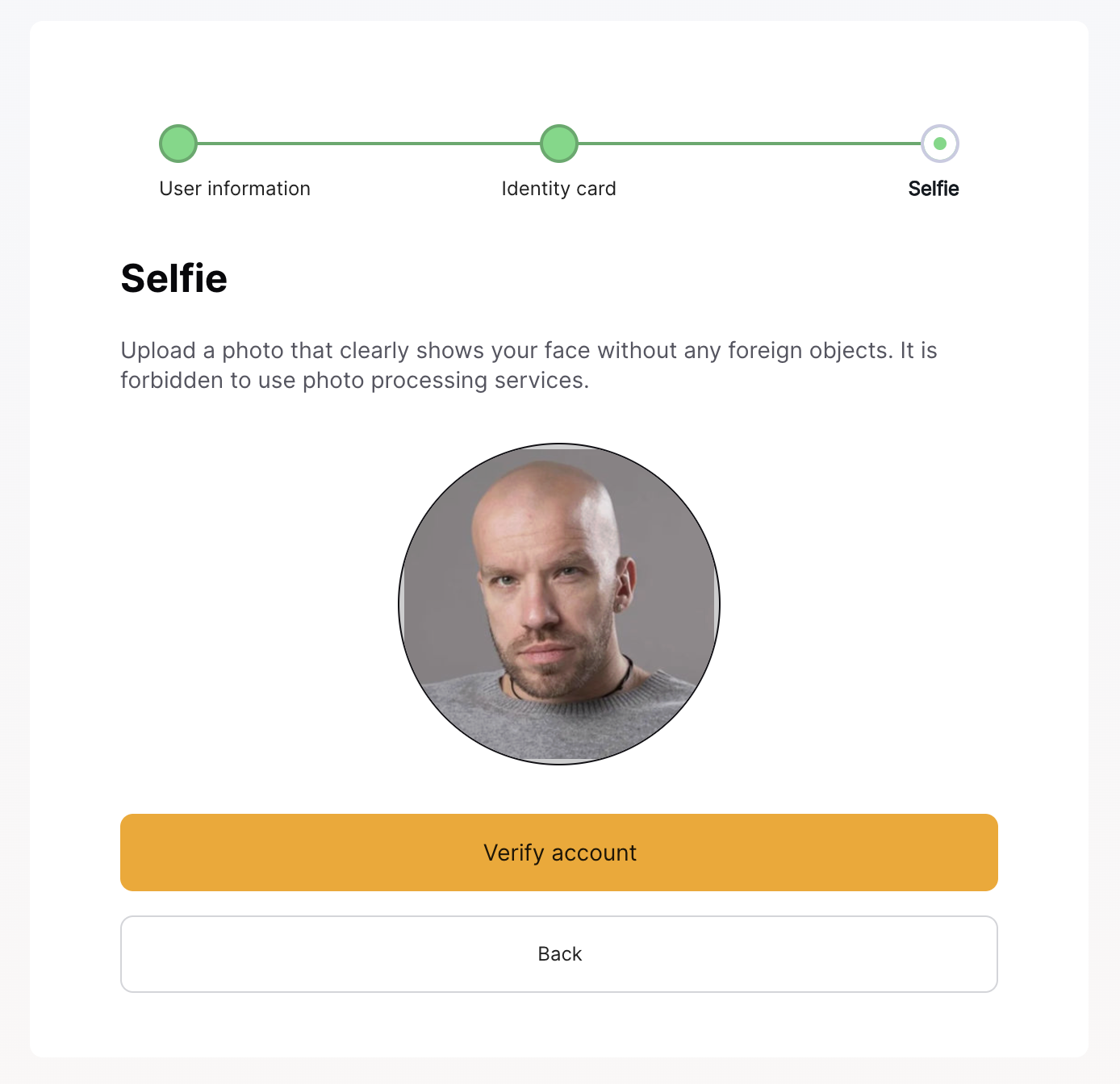
- KYC verification accepts any photo uploaded from a computer
What a spread is and why they wave it in front of your face
A spread is the difference between the buy and sell price of an asset. On different exchanges, the price of the same coin can vary slightly. In theory, if you buy cheaper on one exchange and sell higher on another, you can make money. This is called arbitrage, and it really does work. For those who have fast bots, large volumes, direct API connections to exchanges, and an understanding of what they’re doing.
It doesn’t work for you. Something else has been prepared for you.
How I stumbled upon this beauty
One fine day, someone sends me a link to a YouTube video promising some incredible scheme for making money on spreads. The video has already been removed — YouTube sometimes wakes up and does its job. But the site remained: coinbit-exchange.com.
I open it. And what do I see? A pure, unclouded knockoff of the Bybit exchange. Almost one-to-one. The same sections, similar charts, even AML verification — everything like a real platform. Except it’s not Bybit. It’s a site made to take your money.

A template that lives forever
This fake exchange template has been roaming the internet for a long time. It’s sold, bought, recolored, renamed — and relaunched. Like a phoenix, except instead of ashes, it rises from the tears of deceived crypto investors.
I check the domain WHOIS:
Domain Name: COINBIT-EXCHANGE.COM
Creation Date: 2025-10-14T15:33:11Z
Registrar: Web Commerce Communications Limited dba WebNic.cc
Registrar Abuse Contact Email: [email protected]
Name Server: CODY.NS.CLOUDFLARE.COM
Name Server: GIGI.NS.CLOUDFLARE.COM
Registered in October 2025 via WebNic, paid with crypto, hidden behind CloudFlare. Oh, CloudFlare — we have such an unrequited relationship. Everything is clean, no traces. Professionals? No, just basic scammer hygiene.
And then I find a second site — chronictoken.io. The exact same template, just in green. As if someone opened Photoshop, hit “Hue/Saturation,” and decided that was enough for a new business.


How the scheme works
First comes the warm-up. They create a series of YouTube videos, Shorts, sometimes SEO articles. With the rise of neural networks, this has become extremely easy — content is generated in batches, uploaded to different channels, and left to wait for organic traffic. Sometimes they partner with crypto bloggers who, for a fee, are ready to advertise anything.
In the videos, they talk about a “unique currency pair scanner,” “automatic arbitrage,” “passive income of 5–10% per day.” All of this is presented as secret knowledge for the chosen ones.
Next comes the funnel. You register on the fake exchange and make a deposit. Ten dollars, twenty, thirty — just to test it. And you know what? They even let you withdraw. Five dollars in profit, ten. It works, right?
Then you “ripen.” You deposit a serious amount — one hundred dollars, five hundred, a thousand. And here comes the surprise. Withdrawals don’t work. Support doesn’t respond. The site disappears a week later. And your digital coins go to the same place as the money of investors from the “Finiko” scheme — into the pockets of the organizers.
Signs of a fake crypto exchange
Before depositing money on any platform, check it against this checklist. The more points match, the higher the chance you’re looking at a scam.
Domain and registration. The domain was registered recently (less than a year ago). WHOIS is hidden or anonymized. The name resembles a well-known exchange: Coinbit instead of Coinbase, Chronictoken instead of whatever-token.
Promises and marketing. They guarantee fixed returns of 1–10% per day. Promotion via YouTube Shorts and TikTok with “secret schemes.” Use of words like “passive income,” “automatic earnings,” “currency pair scanner.” Pressure with urgency: “only today,” “only 10 spots left.”
Technical signs. The site is an exact copy of a well-known exchange with a modified logo. KYC verification accepts any photo without checks. No real trading — charts are just pretty pictures. Support responds with templates or doesn’t respond at all.
Money behavior. Small withdrawals go through quickly and without problems. When you try to withdraw a large amount, “technical issues” appear. They ask you to pay extra for “verification,” “tax,” or “insurance” before withdrawal.
The CFTC regulator maintains a list of signs of fraudulent crypto platforms, and MetaMask has published a detailed guide on recognizing fake exchanges.
Technical embarrassment
Now for the sad part. I dug into the code of these sites — and what did I find? jQuery. In 2025. jQuery and Swiper.
Comments in the code are in Russian: “Block for chart,” “login button here.” Our compatriots are trying, but somehow lazily. Guys, you have Claude, you have Cursor, you have all the tools in the world to write a proper frontend — and you’re still copying templates from a decade ago?
Although, if you think about it, why bother. Old schemes work. Suckers haven’t gone extinct. Why write in React if jQuery brings the same money?
Conclusion
Arbitrage exists. You can make money on spreads. But not through a site that looks like Bybit after a stroke, and not via a scheme from a YouTube Short.
If you’re offered a “currency pair scanner” and “automatic earnings” — close the tab. If you’ve already made a deposit — consider it tuition. An expensive lesson, but at least remember it.
And to the creators of these sites — what can I say. At least rewrite it in Vue, have some shame.
P.S. Abuse reports have, of course, been sent.